Private taxi, minibus and coach transfers from Budapest Airport (BUD)
Easy Booking. Reliable Service. Great Prices.
The Sacred Journey: Travelling from Budapest Airport to Bodrogkeresztúr in Comfort and Peace
2026-03-07 | TRAVEL GUIDE
For Jewish pilgrims and travellers making the deeply meaningful journey to Bodrogkeresztúr, every detail of the trip matters — including how you get there. Here's why a private transfer with BudTransfer is the right choice from the moment you land.
There are journeys that are simply journeys, and there are journeys that are something more. The trip from Budapest Ferenc Liszt International Airport to the small village of Bodrogkeresztúr, nestled in the wine country of the Tokaj region in northeastern Hungary, belongs firmly in the second category.
For thousands of Jewish travellers who make this pilgrimage every year — from Israel, the United States, the United Kingdom, Belgium, Canada, and communities across the world — Bodrogkeresztúr is not a tourist destination. It is a place of profound spiritual significance, the resting place of Rabbi Yeshayah Steiner, known as the Reb Shayele of Kerestir, one of the most beloved and widely venerated Hasidic tzaddikim of the modern era. His ohel draws a constant stream of pilgrims seeking blessing, healing, and connection — and the journey to reach it is, in its own way, already part of the experience.
Getting that journey right matters. And that is where BudTransfer comes in.
Bodrogkeresztúr and the Legacy of Reb Shayele
To understand why so many people travel so far to reach this quiet Hungarian village, it helps to understand the man whose memory draws them there.
Who Was Reb Shayele of Kerestir?
Rabbi Yeshayah Steiner was born around 1851 and served as the rabbi of Kerestir — the Hungarian name for Bodrogkeresztúr — until his passing in 1925. During his lifetime he became famous across the Jewish world of Eastern Europe for his extraordinary warmth, his boundless generosity to the poor, and his reputation as a miracle worker of remarkable power. Stories of his intercessions — healings, salvations, blessings that came against all odds — spread from Hungary through the Hasidic communities of Poland, Romania, Ukraine, and beyond.
He was particularly beloved for his care for the materially poor and the spiritually struggling. His table was always open. His door was never closed. And his blessing was sought by Jews of every background and level of observance, not only by Hasidim.
Today, more than a century after his passing, that reputation has only deepened. His yahrzeit — the anniversary of his death, which falls on the 11th of Iyar — draws enormous crowds to Bodrogkeresztúr each spring, with pilgrims arriving from dozens of countries in a matter of days. But the ohel receives visitors year-round, every day of the week, in a steady and moving flow of people who have come from the other side of the world to stand at the grave of a man who never stopped caring about them.
The Village and Its Setting
Bodrogkeresztúr itself is a small, peaceful village in Zemplén County, situated in the famous Tokaj wine region — a UNESCO World Heritage landscape of rolling hills, vineyards, and river valleys where the Bodrog and Tisza rivers meet. It is beautiful in a quiet, unhurried way that feels appropriate for a place of pilgrimage. The ohel is maintained and accessible, and the surrounding region carries the layered history of Hungarian Jewry — a history of remarkable creativity and devastating loss, and of the enduring spiritual legacy that survived both.

The Journey from Budapest Airport: Understanding What You're Asking Of Yourself
Bodrogkeresztúr lies approximately 240 kilometres northeast of Budapest. It is not a difficult journey by Hungarian standards, but it is a significant one — and for pilgrims arriving after long international flights, often with family members of varying ages, sometimes with specific religious requirements around time and schedule, it requires planning that goes beyond simply booking a flight.
The Distance and the Route
The most direct route from Budapest Airport to Bodrogkeresztúr follows the M3 motorway northeast toward Miskolc, then continues on regional roads through the Tokaj wine country to the village. Under good conditions, the journey takes approximately two and a half to three hours. It is a drive through some of Hungary's most characterful landscapes — the flat Hungarian plain gradually giving way to the volcanic hills of the Zemplén range, the vineyards of Tokaj appearing on the hillsides, the rivers glinting in the valley below.
It is, in other words, a journey worth doing well.
Why Public Transport Simply Isn't the Answer
The honest reality is that public transport between Budapest and Bodrogkeresztúr is not designed with pilgrims in mind. Train services run to Tokaj and the surrounding region, but reaching the village itself requires changes, taxis, and local navigation that is challenging even for Hungarian speakers. For a family arriving with luggage from Tel Aviv or New York, with elderly grandparents or young children in tow, with specific arrival times dictated by Shabbat or holiday schedules — the public transport option is not merely inconvenient. It is, for many groups, simply not viable.

Why a Private Transfer with BudTransfer Is the Right Choice
For Jewish pilgrims travelling to Bodrogkeresztúr, a private transfer is not an indulgence — it is the practical, respectful, and dignified way to make a journey that deserves to be made properly.
Shabbat and Holiday Timing: When Precision Is Non-Negotiable
For observant travellers, the timing of arrival in relation to Shabbat or Jewish holidays is not a preference — it is a halachic requirement. Arriving with sufficient time before candle-lighting, ensuring that the journey does not extend into Shabbat, knowing that the vehicle will leave on time and arrive on schedule — these are considerations that a standard taxi service or public transport network simply cannot accommodate with the necessary reliability.
A pre-booked private transfer with BudTransfer removes this uncertainty entirely. You know your departure time from the airport. You know the expected journey time. You know that your driver is monitoring your flight and will adjust for any delays. For an observant family that has carefully calculated their arrival around a Friday evening candle-lighting time in Bodrogkeresztúr, this level of reliability is not a convenience — it is essential.
Planning Around the Yahrzeit
During the yahrzeit period in the spring, the demand for transport to Bodrogkeresztúr intensifies dramatically. Hundreds of pilgrims arrive at Budapest Airport within a compressed window of time, all headed to the same village, all with similar timing requirements. Pre-booking a private transfer well in advance of the yahrzeit is not merely advisable — it is the only way to guarantee that your group has confirmed, reliable transport when you need it most. Last-minute arrangements during the yahrzeit period are frequently impossible to secure.
Travelling as a Group: The Minivan Advantage
Pilgrims to Bodrogkeresztúr rarely travel alone. They come in family groups, in chevra groups from the same community, in pairs of friends who have made this journey together for years. For these groups — typically between four and eight people — a private minivan transfer is the only format that makes genuine sense.
Keeping the Group Together
The spiritual and social dimension of travelling together to a place of pilgrimage is not incidental — it is part of the experience. The conversation in the car, the shared anticipation, the opportunity to say Tehillim together as the Hungarian countryside passes by — these are moments that belong to the journey, and they only happen when the group is in the same vehicle. Splitting into multiple taxis doesn't just create logistical complexity. It fragments the experience in a way that matters.
Comfort for Every Member of the Group
Pilgrimages to Bodrogkeresztúr are multigenerational in a way that few travel experiences are. It is entirely common for a group to include a grandfather in his eighties making the journey for the twentieth time, his middle-aged children, and grandchildren encountering the ohel for the first time. The physical comfort requirements of these different generations vary considerably — and a spacious, air-conditioned minivan with generous legroom, comfortable seating, and easy entry and exit serves all of them in a way that cramped or shared transport simply cannot.
For elderly travellers in particular, the door-to-door nature of a private transfer — picked up at the airport terminal, delivered to the entrance of the accommodation or the ohel itself — eliminates the physical challenge of navigating unfamiliar transport systems with luggage.
A Driver Who Knows the Destination
BudTransfer drivers who serve the Bodrogkeresztúr route are familiar with the destination in ways that matter practically. They know the village, the location of the ohel, the guesthouses and accommodations that pilgrims typically use. They know the approach roads and the parking arrangements during busy periods. For a group arriving for the first time, this local knowledge is genuinely valuable — the difference between arriving smoothly at exactly the right place and spending twenty minutes in a village of a few hundred people trying to find an address on an unfamiliar road.
What to Expect When You Book with BudTransfer
The booking process is straightforward, the pricing is transparent, and the service is built around the reality of what international travellers actually need.
Flight Monitoring That Works While You're in the Air
Your BudTransfer driver tracks your inbound flight from departure. Whether you're arriving from Ben Gurion Airport in Tel Aviv, JFK in New York, or a connecting flight through Vienna or Frankfurt, your flight status is monitored continuously. If your El Al flight is delayed by an hour, your driver already knows. The pickup adjusts. You land, you clear customs, and your driver is waiting — composed, professional, name sign in hand.
For observant travellers with tight timing requirements around Shabbat or holidays, this flight monitoring capability is particularly significant. It means that if a delay threatens to compromise your schedule, you are informed and your arrangements can be adjusted as early as possible — not when you land, but while you're still in the air.
Meet and Greet in Your Language
Many pilgrims travelling to Bodrogkeresztúr are more comfortable in Hebrew, Yiddish, or English than in Hungarian. BudTransfer's meet-and-greet service ensures that the arrival experience is clear and unambiguous regardless of language — your driver is visible, identifiable, and ready to assist from the moment you emerge from customs. There is no language barrier to navigate, no uncertainty about whether you've found the right driver, no fumbling with Hungarian signage. You are met, your luggage is assisted, and you are on your way.
Fixed Pricing With No Surprises
The journey from Budapest Airport to Bodrogkeresztúr is a significant distance, and pricing should reflect that clearly and honestly. BudTransfer provides fixed-price transfers — the rate you agree at the time of booking is the rate you pay on arrival. There is no meter, no surge pricing because your flight landed at an inconvenient time, and no supplementary charges for luggage or waiting. For groups managing a pilgrimage budget, this predictability is genuinely useful.
Vehicles That Suit the Journey
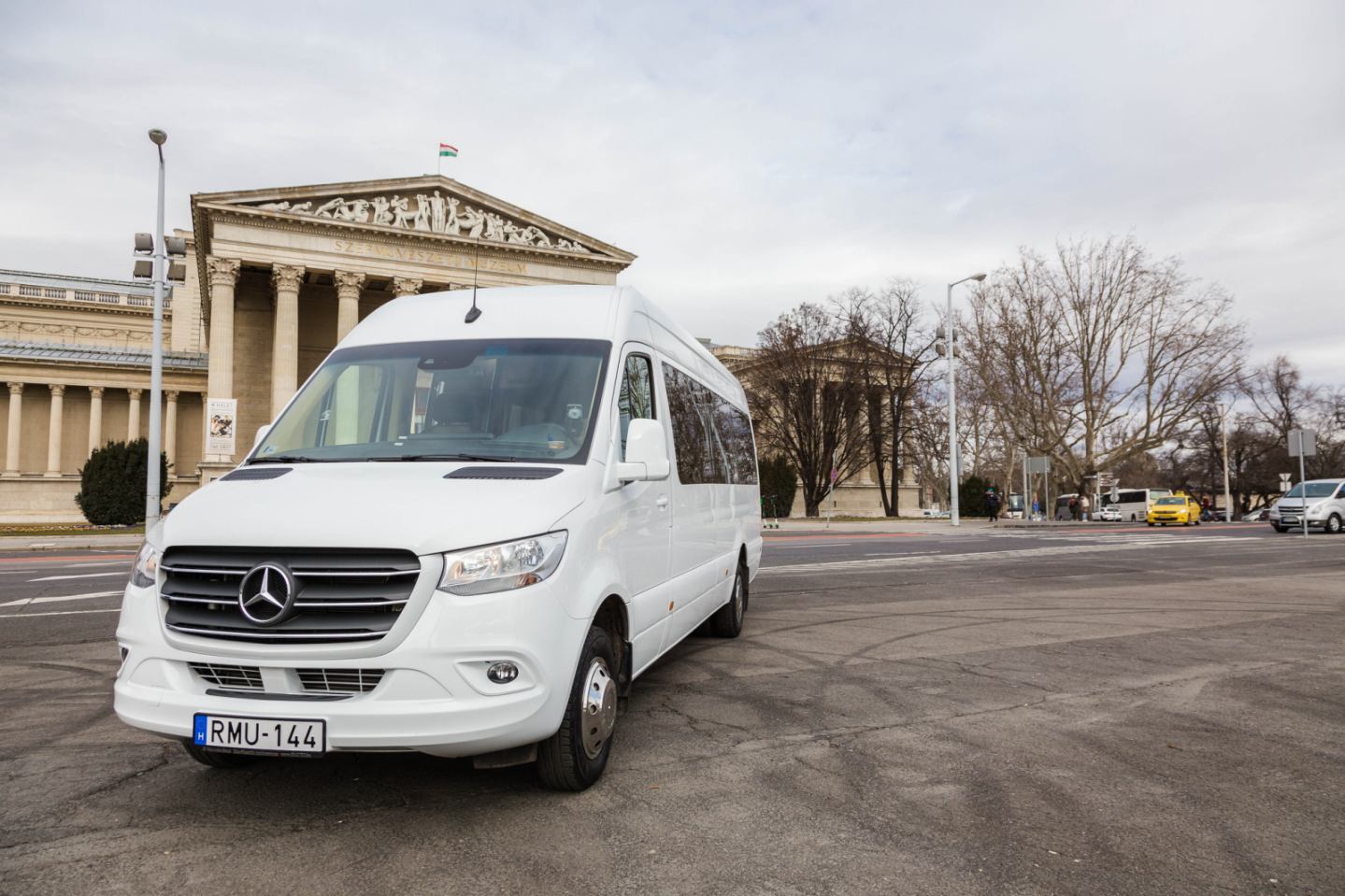
A nearly three-hour journey deserves a vehicle that makes those hours comfortable rather than merely endurable. BudTransfer's minivan fleet — including the Mercedes-Benz V-Class — offers generous seating, full climate control, and luggage capacity that handles the bags of a family group without compromise. The ride is smooth and quiet. There is space to rest, to talk, to read, to say Tehillim, or simply to watch the Hungarian landscape unfolding outside the window as you travel toward a destination that has drawn your family — perhaps for generations — across the world.
A Journey Worth Making Well
The pilgrimage to the ohel of Reb Shayele of Kerestir is, for tens of thousands of Jewish travellers, one of the most meaningful journeys they will ever make. It is a journey made in faith, in memory, in hope — and sometimes in gratitude for blessings already received. It deserves to be made with dignity, with comfort, and without unnecessary stress.
From the moment your flight lands at Budapest Airport, BudTransfer takes the logistical weight off your shoulders — so that by the time you arrive in Bodrogkeresztúr, you are already where you need to be: present, peaceful, and ready for the moments that brought you here.
Book your private transfer from Budapest Airport to Bodrogkeresztúr at budtransfer.com — professional, reliable, door-to-door service for Jewish pilgrims and travellers, available every day of the year.